







Yes. 4D number plates are legal in Northern Ireland, and across the rest of the UK, as long asthey are made to the current British Standard and display your registration correctly. The raised characters are not the issue. What matters is everything else about the plate: the font, the spacing, the colours, the materials and who made it.
The government’s own guidance on displaying number plates says plates can have 3D (raised) characters. There is no separate rulebook for 4D plates. They have to meet exactly the samerequirements as a standard printed plate. Those requirements come from the Road Vehicles (Display of Registration Marks) Regulations 2001 and from British Standard BS AU 145e, which has applied to every plate fitted since 1 September 2021.
That is the short answer. The longer answer covers where the DVLA and the DVA fit in, and how to tell a road legal 4D plate from one that will cause you bother.
What is a 4D number plate?
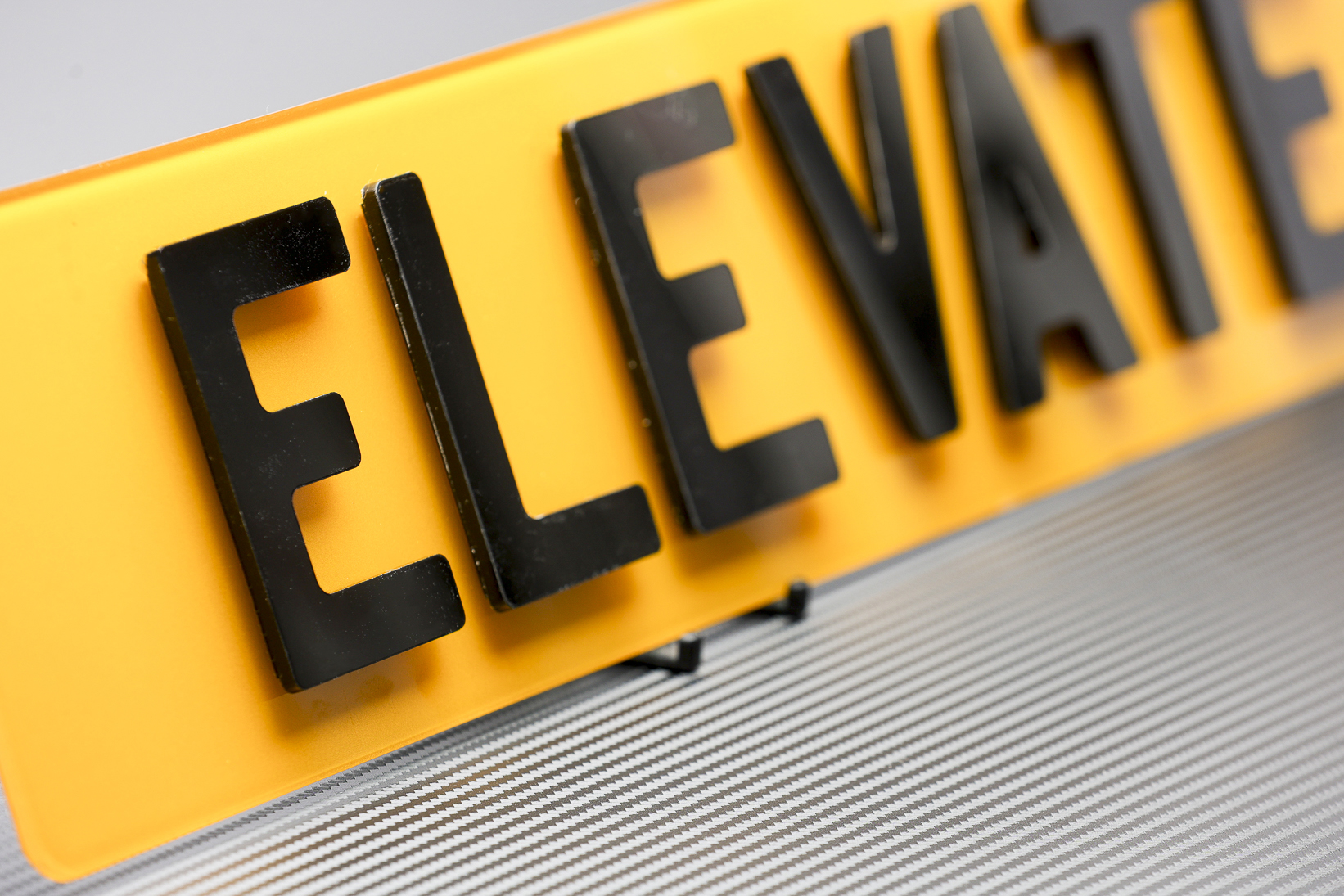
A 4D plate uses characters laser-cut from solid black acrylic, usually 3mm deep, bonded to the reflective face of the plate. The result is a crisp, squared-off look with real depth, quite different from the softer domed finish of a 3D gel plate. Some styles combine the two by adding a gel resin top to the acrylic character.
“4D” is a trade name, not a legal term. As far as the rules are concerned, these are simply plates with raised characters.
Are they DVLA legal or DVA legal?
This causes a lot of confusion locally, and understandably so.
Since 2014, vehicle registration and licensing for Northern Ireland has been handled by the DVLA in Swansea. The DVLA also keeps the Register of Number Plate Suppliers, which every business making or selling plates in the UK has to be on. So when people ask whether a plate is “DVLA legal”, what they really mean is: does it comply with the regulations and the British Standard, and did it come from a registered supplier?
The DVA still looks after driver licensing and vehicle testing in Northern Ireland. It does not set the rules for number plates, but its examiners check them as part of the MOT at DVA test centres. A plate that meets the UK rules will satisfy the DVA, and one that does not can cost you a pass. Out on the road, enforcement is a matter for the PSNI.
In practice, “DVLA legal” and “DVA legal” come to the same thing.
What makes a 4D plate road legal?
A compliant 4D plate will have:
- Solid black characters. One shade of black on the face and the sides. No two-tone effects, coloured edges or carbon patterns.
- Fixed, non-reflective characters. They must be permanently bonded so they cannot be removed or rearranged.
- The prescribed font and size. On a car, each character is 79mm tall and 50mm wide (except 1 and I), with a 14mm stroke.
- Correct spacing. 11mm between characters and 33mm between the two groups, with nothing nudged to spell a name.
- A plain reflective background. White at the front, yellow at the rear, with no pattern behind the characters.
- The right markings. “BS AU 145e”, plus the supplier’s name and postcode.
- Nothing over the top. No tints, films, sprays or covers.
Get any of this wrong and you risk a fine of up to £1,000 and a failed MOT.
Could the rules change?
They might. The British Standard is under review, and in late 2025 the BSI consulted on an amendment that would require finished plates to be flat, which would rule out raised characters. That consultation closed in December 2025 and, at the time of writing in October 2026, no change has been confirmed. Properly made 4D plates remain legal today, and we will update this guide if that changes.
Buying 4D plates with confidence
The style is rarely the problem. The supplier is. Most trouble starts with unregistered online sellers making plates without asking for paperwork. A registered supplier has to see proof of your identity and proof that you are entitled to the registration, such as your V5C or V5CNI. If nobody asks, treat that as a warning sign.
Wylie Number Plates is a DVLA Registered Number Plate Supplier based in Belfast, with 80 years of expertise built into every plate. Our 4D Gloss and 4D Gel plates are made from BS AU 145e components and are fully road legal. Build yours online with our easy plate builder, or call in to see us on Nelson Street.

Frequently Asked Questions – Are 4D Number Plates Legal in Northern Ireland?
1. Are 4D number plates legal in Northern Ireland?
Yes, 4D number plates are legal in Northern Ireland and throughout the UK, provided they comply with current regulations and British Standard BS AU 145e. Raised characters are permitted as long as the plates meet the required standards for font, spacing, colours and materials.
2. Will 4D number plates pass an MOT in Northern Ireland?
Yes, road-legal 4D number plates can pass an MOT at DVA testing centres in Northern Ireland. However, plates with incorrect spacing, non-compliant fonts, coloured characters or missing British Standard markings could result in an MOT failure.
3. What is the difference between 3D and 4D number plates?
3D number plates feature raised gel characters with a smooth, rounded finish, while 4D plates use laser-cut acrylic characters, typically 3mm thick, for a sharper, more defined appearance. Both styles are legal when manufactured to the required UK standards.
4. Can you be fined for having illegal 4D number plates?
Yes, drivers displaying number plates that do not comply with UK regulations can face fines of up to £1,000. Common issues include incorrect character spacing, tinted backgrounds, coloured lettering and plates that do not meet British Standard BS AU 145e.
5. Are 4D number plates being banned in the UK?
As of October 2026, 4D number plates remain legal in the UK, although proposed changes to the British Standard could affect raised-character plates in the future. No confirmed ban has been introduced, so compliant 4D plates can still be used legally.


